ServicesWhole-Home Filtration
Whole-Home Filtration in Paradise Valley
One system on your main water line treats every shower, sink and appliance, so water tastes and smells cleaner wherever you turn the tap. We start with a free water test, then size the tank to your plumbing so pressure holds steady.
What Whole-Home Filtration Does for Your Home
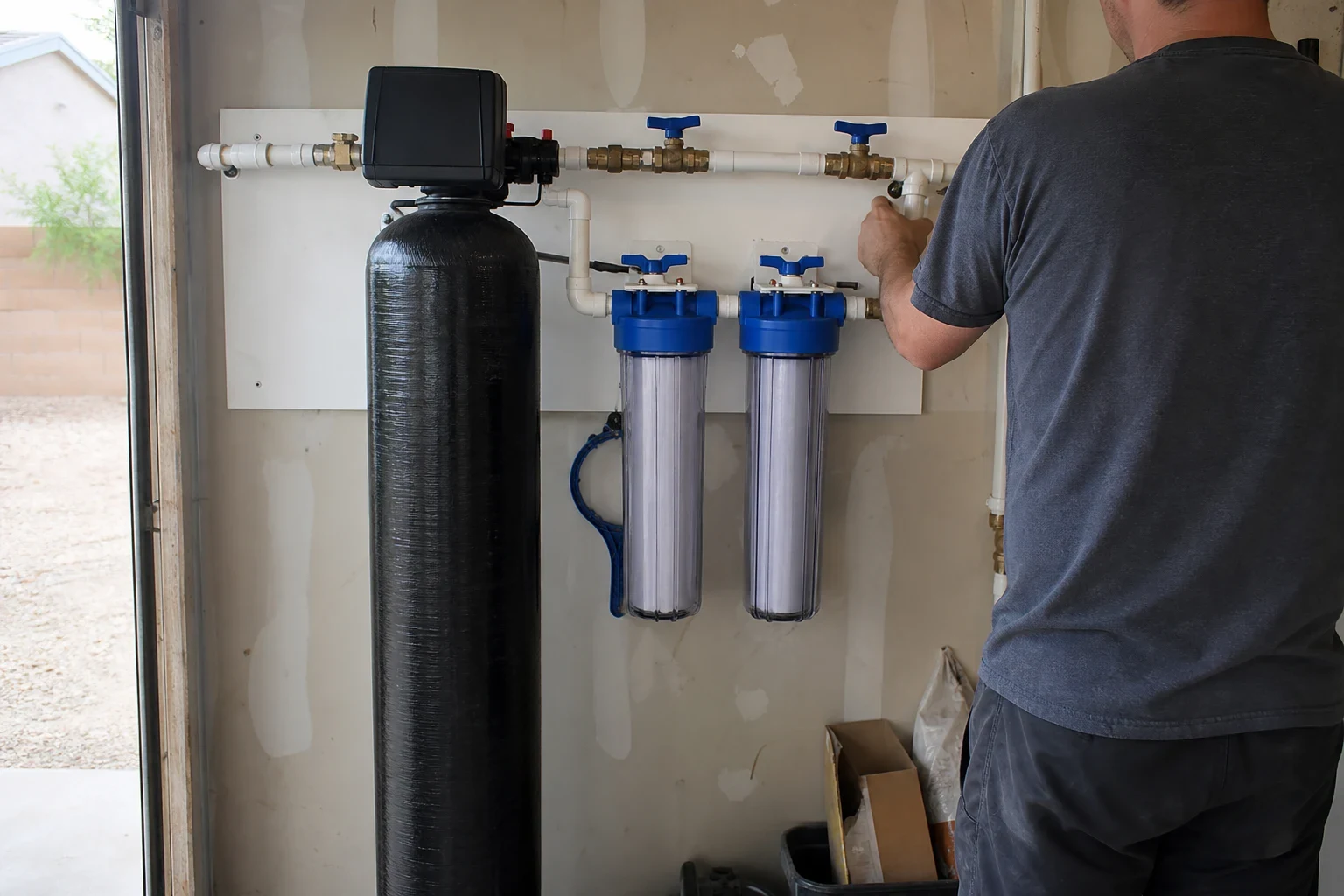
A whole-home system sits on the main line, upstream of every branch in the house, including the pipe that feeds your water heater. Most of the systems we install use activated carbon, which holds on to chlorine and the taste and smell that come with it. A sediment stage ahead of the carbon catches grit and rust flakes so the carbon lasts longer.
The difference is easy to notice. Showers lose that pool smell, skin and hair feel less dry, and a glass from any tap tastes the same as the one from the fridge. Keeping grit out of the water heater, aerators and appliance valves also helps them run the way they were designed to. Because the tank is sized to your home's flow rate, you should not feel a pressure drop when two showers and the dishwasher run at once.
Whole-home filtration is not a softener. Carbon does little for hardness or scale, so if your test shows hard water, we will explain how a water softener pairs with it. For drinking water at one sink, reverse osmosis may be the better fit.
What Your Installation Includes
A free water test first
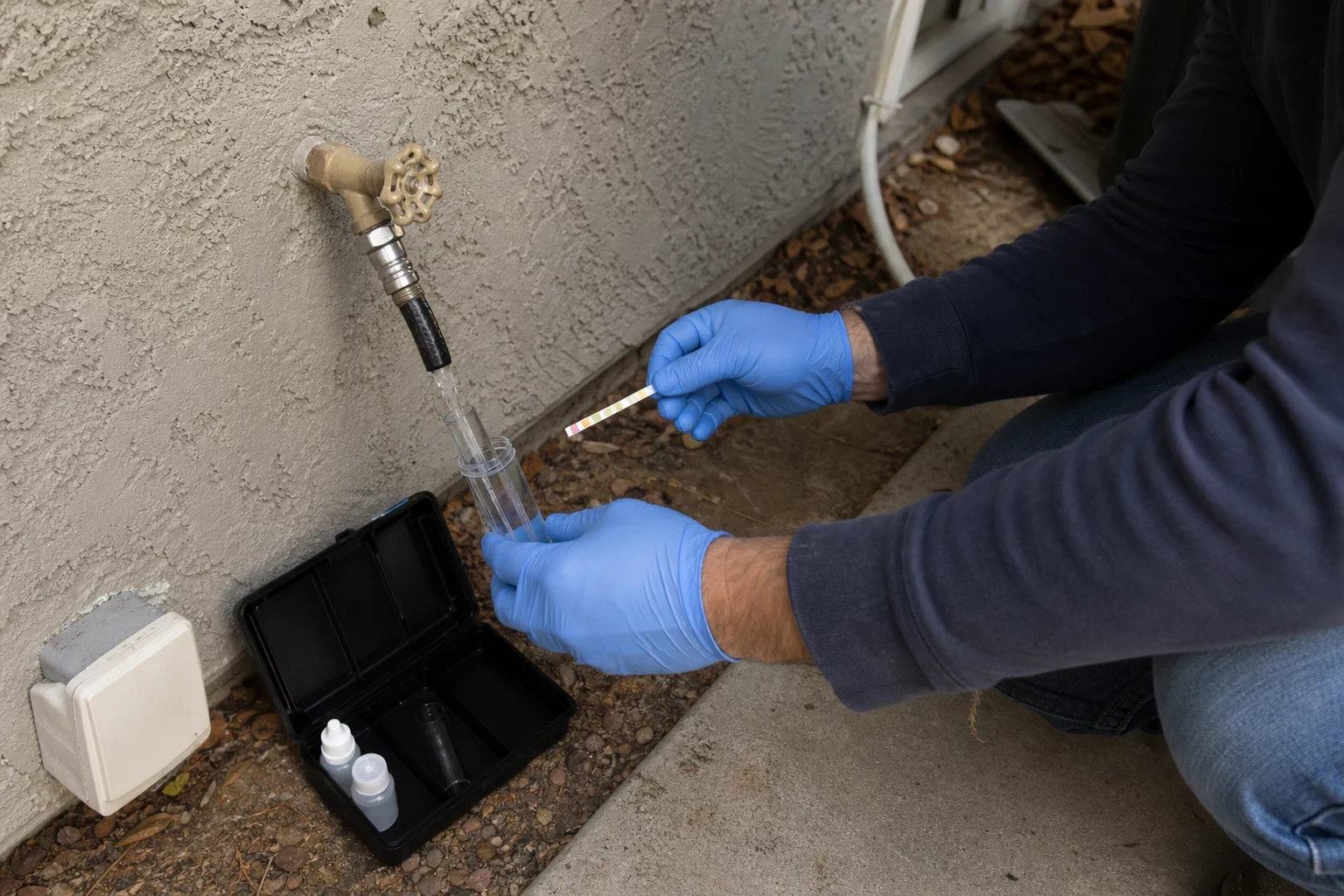
We test your water before recommending anything, and the test comes with zero obligation. The results decide which media and tank size make sense.
Sizing to your flow rate
We count bathrooms, check your main line size and look at peak use. An undersized tank chokes pressure, an oversized one costs more than it should, so we aim for the middle.
Sediment pre-filter
A cartridge ahead of the main tank traps sand and scale flakes. It protects the carbon and keeps faucet aerators and shower heads from clogging.
Bypass valve and clean plumbing
A bypass handle lets you route water around the system while a cartridge is swapped, so the house never goes dry. Joints are square, supported and labeled, and the finished install sits neatly in your garage or utility space.
Install included with the system
Installation comes included with the water treatment systems we offer, so the price you hear covers the equipment and the work to put it in.
A short tour at the end
Before we pack up, you see where the bypass handle sits, how the pre-filter housing opens and roughly when each part will need attention. Upkeep should never be a guessing game.
Signs Your Home Could Use Whole-Home Filtration
- Chlorine smell in the shower
- Steam from a hot shower carries chlorine with it, which is why a small bathroom with the door shut can smell like a pool. Carbon at the main line takes it out before the water ever reaches the shower head.
- Water tastes off at some taps
- If you only drink from the fridge dispenser, the rest of the house is getting untreated water. A whole-home system makes every faucet usable.
- Skin and hair feel dry
- Chlorine in hot shower water can leave skin feeling tight and hair feeling rough, and dry desert months make it more noticeable. Filtering it out before it reaches the shower is one of the most common reasons people choose this system.
- Grit in aerators or shower heads
- Small particles that collect in screens point to sediment in the line. A pre-filter catches them before they reach fixtures and appliances.
- Pitcher filters you keep replacing
- Countertop and pitcher filters add up over a year. One system at the main line often costs less to keep running per gallon.
How the Work Goes
- 1
Test and talk it through
We test your water and go over the readings with you in plain terms. If filtration is not the right answer, we say so.
- 2
Choose the system and location
We find the best spot near your main shutoff, check drain access if the system needs one and confirm the tank size. You get installed system pricing by phone before any work is scheduled.
- 3
Install day
Your installer shuts the water off, cuts in the system with a bypass and pre-filter, and flushes the new media until the water runs clear. Floors and walls near the work area are covered, and most installs take part of a day.
- 4
Check pressure and clean up
We test flow at a few fixtures, check every joint for leaks and clear away packaging and debris. Then we go over filter changes so nothing is a mystery later.
What Shapes Your Quote
We put a number on your system only after the water test and a look at your plumbing, because no two installs are quite alike. The quote names the equipment and the labor, and installation comes included with the system. These factors carry the most weight.
- Tank size and flow rate
- A home with more bathrooms needs more media to keep pressure up during heavy use. Larger tanks cost more up front but last longer between media changes.
- Type of media
- Plain activated carbon is the workhorse for chlorine. Catalytic carbon or extra stages raise the price, and we suggest them only when your test results call for them.
- Where the main line is
- An easy-to-reach line in a garage keeps labor simple. Tight spaces, an exterior location that needs a cover, or extra piping add time.
- Pairing with other equipment
- Adding a water softener or a drinking water system at the same visit can share plumbing work, which often costs less than two separate installs.
- Ongoing upkeep
- Sediment cartridges and eventual media replacement are part of the long-term cost. We tell you the schedule up front so running costs are clear.
Questions About Whole-Home Filtration
- Will I notice a drop in pressure after the filter goes in?
- You shouldn't, as long as the tank matches your home's peak demand. We size it so everyday use feels unchanged. Pressure can sag if the pre-filter cartridge clogs, so we show you how to spot that and swap it.
- Does whole-home filtration soften water?
- No. Carbon filtration targets chlorine, taste and odor, not the minerals that cause scale. If your water test shows hardness, we can talk about a water softener alongside the filter.
- How often does the system need maintenance?
- The sediment cartridge usually needs changing a few times a year, depending on your water. The carbon media lasts much longer, often several years in a typical household. We set the schedule based on your test and your usage.
- Is the filtered water fine to drink, or should I add something at the kitchen sink?
- For most people, water from a whole-home system tastes good enough to drink straight from any tap. If you would like a further step for cooking and drinking, a reverse osmosis unit under the kitchen sink provides it. Your water test helps show whether that extra step is worth it.
- Where does the system go?
- Usually beside the main water line, often in the garage or a utility area. We pick a spot that is easy to reach for filter changes and keeps the installation neat.
Find Out What Your Water Needs
A free water test shows whether whole-home filtration is the right step for your home. There is no obligation, and you will hear installed system pricing before anything is scheduled.