ServicesWater Testing
Water Testing in Paradise Valley, Explained Reading by Reading
A softener, a filter or nothing at all: the right answer depends on readings, not guesses. We sample your water at the kitchen tap, walk you through every number and give you a plain view of whether your home needs treatment. The visit is free, with no obligation.
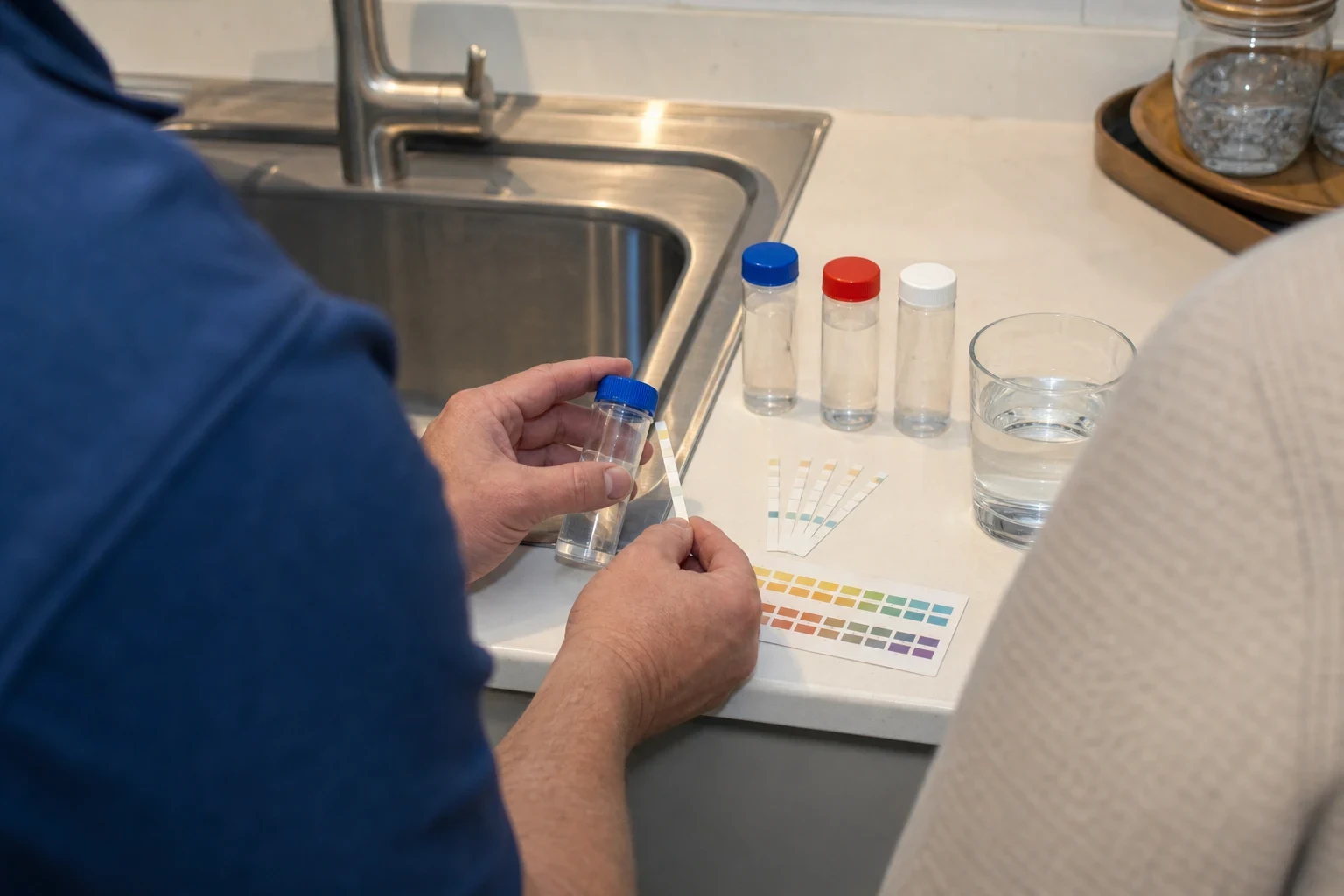
Why Testing Comes Before Any Equipment
Most water complaints start out vague. White crust on a faucet, a chlorine smell in the shower and spotty glassware each trace back to something different, and each has its own fix. Buying on a hunch tends to end with the wrong system, or with more system than the problem ever needed.
Hardness matters beyond appearance. Scale settles inside water heaters and on heating elements, where it behaves like a layer of insulation, so the heater runs longer to deliver the same hot water. Knowing your hardness tells you whether treatment could trim that running cost or whether your water is already fine as it is.
We treat the test as the start of a conversation, not a sales pitch. If the readings say your water needs nothing, that is what we will tell you.
The Readings We Take at Your Home
- Hardness level
- We read calcium and magnesium, which leave scale on faucets, shower glass and water heater elements. This number tells us whether a softener is worth putting in.
- Total dissolved solids (TDS)
- This number reflects everything the water is carrying. It shows whether a reverse osmosis unit at the kitchen sink would noticeably improve your drinking and cooking water.
- Chlorine level
- City water is treated to disinfect it, and what remains is the taste and smell you notice. We measure it so you can judge whether whole-home filtration is worthwhile for bathing and laundry.
- pH and iron levels
- We see whether your water tilts acidic or alkaline and check for iron, which can leave stains on sinks and clothes. Both shape which filter media will last best.
- Every result explained
- You watch each reading come up and hear what it means and what counts as normal. If anything needs a deeper look, we explain how an independent lab could test a sample.
Signs Your Water Is Worth Testing
Crust on faucets and showerheads
White or chalky buildup that returns soon after cleaning usually means hard water. The same minerals are collecting where you cannot see them.
A water heater that rumbles
Popping or rumbling from the tank often comes from scale sitting on the bottom. It can also mean the heater is using more energy than it should.
Chlorine taste or smell
If you avoid tap water because of how it tastes, a test shows whether chlorine is the cause and how strong it is.
Dry skin and stiff laundry
Hard water makes soap work less well, so towels feel rough and skin feels tight after a shower.
You are new to the house
A previous owner's softener or filter may be worn out, bypassed or set wrong. A test gives you a baseline before you replace or remove anything.
What Shapes the Cost After the Test
You pay nothing for the test, and booking it binds you to nothing. If you later choose to treat your water, our offer is install included with water treatment systems. What you would pay then follows from your readings and the way your plumbing is laid out, and we give you installed system pricing by phone once those details are settled.
What the readings call for
Very hard water, high chlorine and high dissolved solids each lead to different equipment. Some homes need one system, others benefit from pairing two.
Size of your home
More bathrooms and higher daily water use mean a larger system with more capacity, so it keeps up without losing pressure.
Where the main line runs
An accessible spot near the main line in a garage keeps the work simple. Tight spaces or rerouting add time and materials.
Existing equipment
An old softener or filter may need removal first, or it may be reusable in part. We check it during the test so there are no surprises later.
How Your Free Test Works
- 1
A short phone call
Tell us what you have noticed and we arrange a time that suits your day. We ask about any equipment already installed so we can check it too.
- 2
Testing at the tap
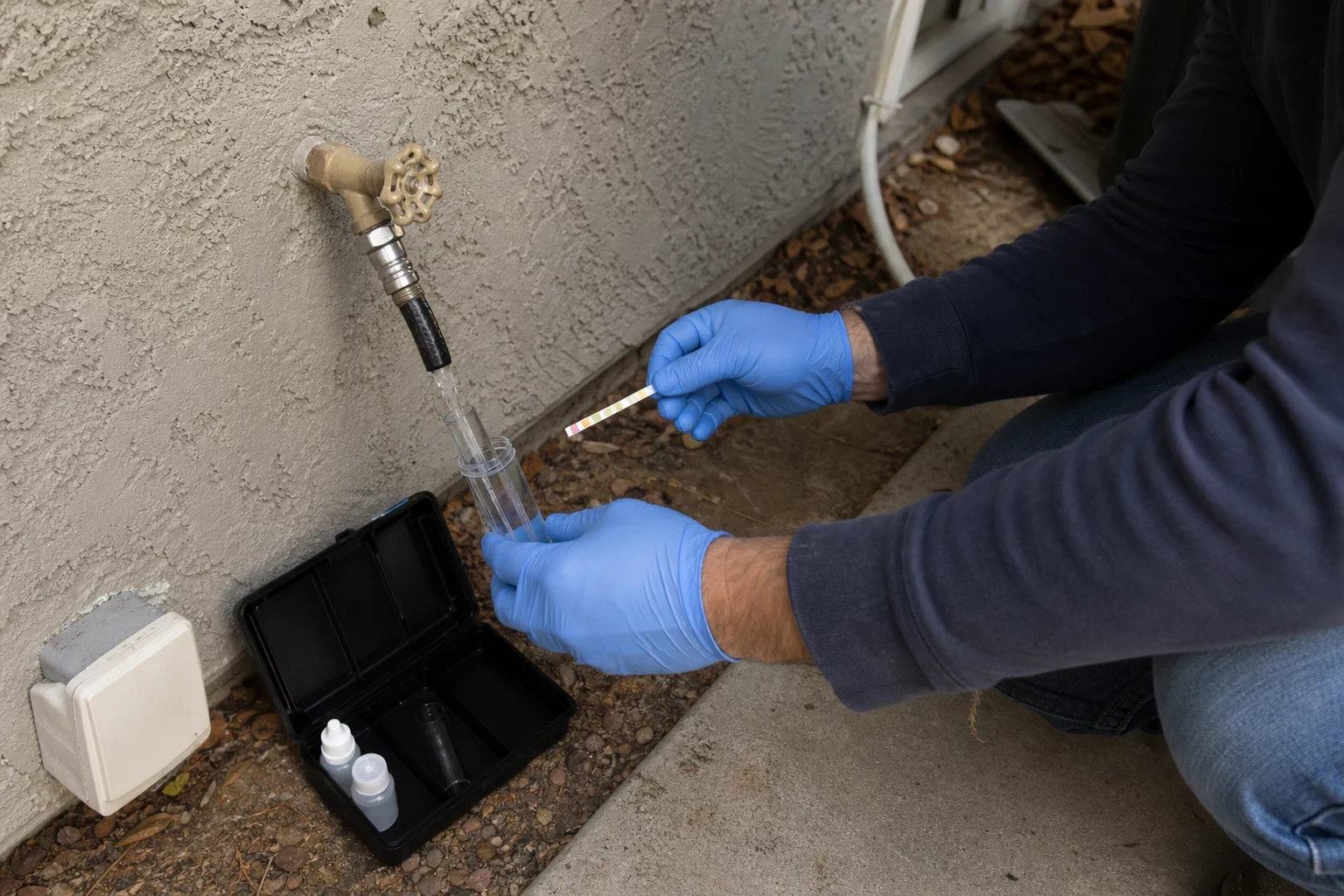
We draw samples from the kitchen and, where useful, an untreated point near the main line. Most readings appear within minutes, right in front of you.
- 3
Results, explained calmly
We go through each number, compare it with ordinary ranges and tell you what it means for comfort, appliances and running costs. No jargon, no pressure.
- 4
An honest recommendation
If treatment would help, we explain which option fits, whether whole-home filtration, a water softener or reverse osmosis, and why. If nothing is needed, we say so and leave it there.
What People Ask About Our Water Test
Do I pay anything for the test?
No, and saying yes to it doesn't tie you to anything. You keep the readings and our notes no matter what you decide about equipment later.
How much time should I set aside?
Readings are ready in a few minutes, so the visit tends to be short. Most of it is spent talking through the results and your questions, and that lasts as long as it helps you.
Is the test just a way to sell a softener?
We suggest one only when your hardness reading backs it up. Many homes do better with a carbon filter or reverse osmosis at the sink, and some need no equipment. The readings make the call, not our company name.
Can I just use test strips from the store?
Strips are a fair starting point and give a rough picture. Our test measures several values with more precision, and we tell you what each means for your pipes and appliances, which a strip can't.
What does hard water have to do with my energy bill?
Scale builds on heating elements and the floor of the water heater tank, and it slows heat getting into the water. The heater stays on longer to get hot. Treating hardness can keep it running efficiently for years.
Know Your Water Before You Decide
A short visit gives you real numbers and a straight answer on whether your home needs treatment. There is no cost and no obligation.