ServicesWater Softeners
Water Softeners in Paradise Valley, Sized From Your Own Test
Hard water leaves a chalky crust on glass, coats heating elements and shortens the life of the appliances that use the most energy in your home. We test your water first, then size and install a softener that removes the minerals behind it, without wasting salt or water.
What a Softener Does, and When It Earns Its Place
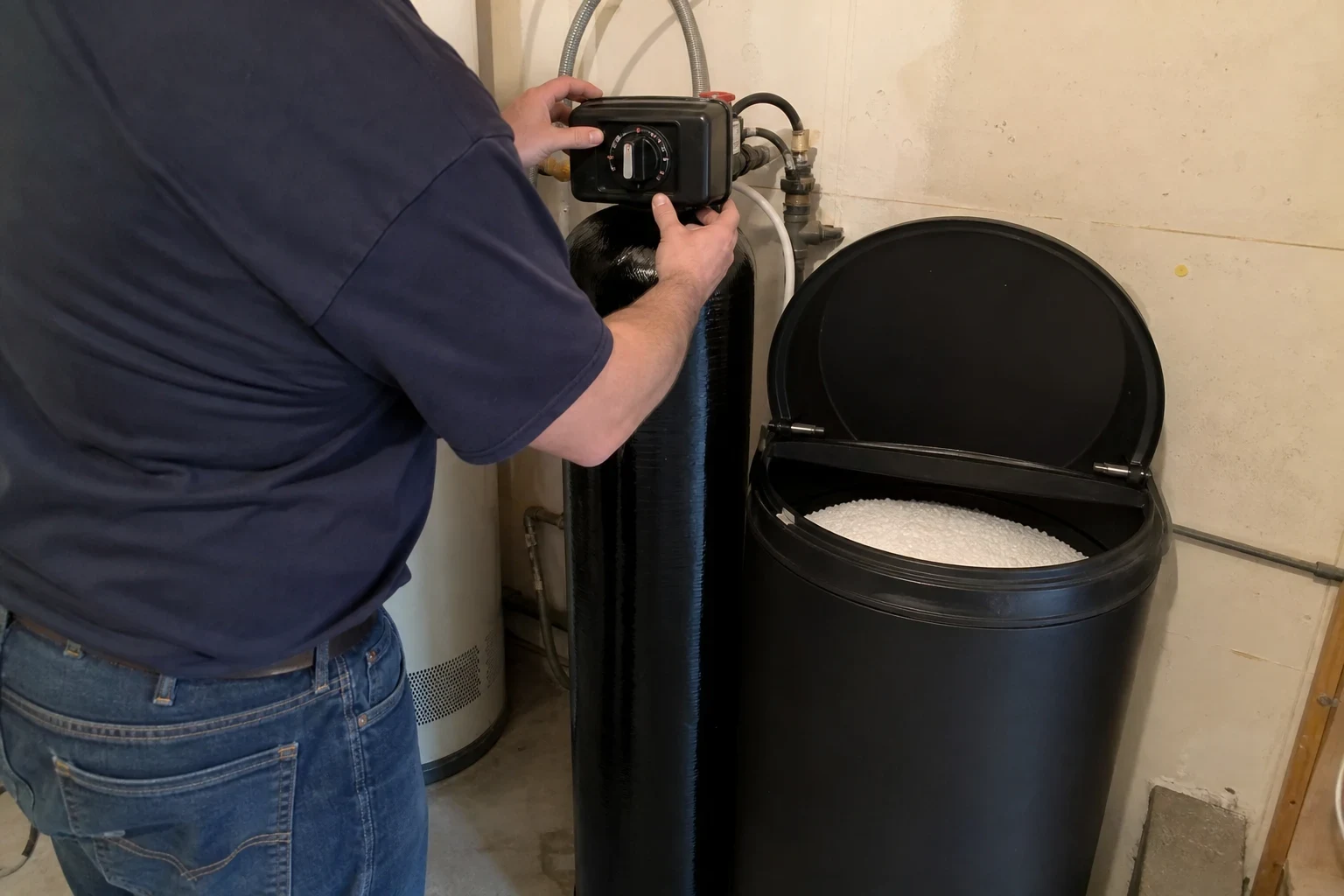
A water softener passes your incoming water through a bed of resin beads that trade calcium and magnesium for sodium or potassium. Those two minerals are what form scale. Take them out at the main line and every tap, shower and appliance in your home receives softer water.
Water across the Valley runs hard, and the effect shows up in running costs. Scale settles on water heater elements and tank bottoms, where it insulates the water from the heat and makes the heater work longer for the same hot shower. Softened water keeps those surfaces clean, so heaters, dishwashers and washing machines run closer to the way they did when new.
A softener is not a filter. It does not change taste or remove chlorine, so we often pair it with whole-home filtration or an under-sink reverse osmosis unit when your test points that way. We will tell you plainly if a softener alone is enough.
Inside a Softener Installation
- Capacity matched to your readings
- Grain capacity is chosen from the hardness we measured and the water your household actually draws. Too small and the unit recharges far too often; too large and you pay for resin you never use.
- A valve that regenerates on demand
- We lean toward metered valves that count gallons and recharge only when the resin is close to spent. A clock-based timer recharges on schedule regardless, spending salt and water it did not need.
- Bypass and tidy pipework
- Turn the bypass handle and water flows around the softener straight to your fixtures, so servicing the unit never means going without water. Joints run square, pipe is strapped to the wall, and the layout stays easy to follow for anyone who works on it later.
- Drain and brine tank placement
- The drain line gets a proper air gap, and the brine tank sits where pouring in a bag of salt is comfortable, not a stretch over the water heater.
- Equipment and labor together
- Install is included with our water treatment systems. The figure we give you already accounts for putting the softener in, not just the box it arrives in.
When Hard Water Starts Showing Up at Home
Chalky rings at the tap
As hard water evaporates it leaves calcium behind, building white deposits around faucet bases and plugging showerhead nozzles.
Glassware that never quite shines
A dull haze on drinking glasses, and shower doors that streak again a day after cleaning, are classic mineral residue rather than a cleaning problem.
Rumbling from the water heater
Popping noises during a heating cycle usually mean scale has collected on the tank floor. Water trapped under that layer boils in pockets, and the heater takes longer to recover.
Rough laundry, tight skin
Calcium reacts with soap and detergent, so towels dry stiff, lather stays thin and you keep reaching for more product.
Short-lived appliances
Scaled inlet valves and heating elements are a frequent reason dishwashers, ice makers and espresso machines give out before their time.
What Moves the Price
The cost of a softener has more to do with your water and your plumbing than with the brand name on the tank. Once we have your test results and know where the main line runs, we give you a figure by phone with installation built in.
Hardness and household size
Each extra grain of hardness and each extra person adds to the load the resin has to carry. That load sets the tank size and the valve needed to run it.
Metered or timed valve
A demand valve adds a modest amount up front and saves salt and water every month after.
Whether a loop is already in place
Plenty of homes were built with a softener loop ready at the garage wall. Without one, we run new pipe from the main, which takes extra hours and material.
Placement and drain distance
A short run to the main and a drain close by keep things simple. A cramped utility closet or a long drain route adds labor.
Pairing with filtration
Adding a carbon filter or a reverse osmosis unit raises the total. We list each component on its own so nothing is folded in out of sight.
From First Test to Soft Water
- 1
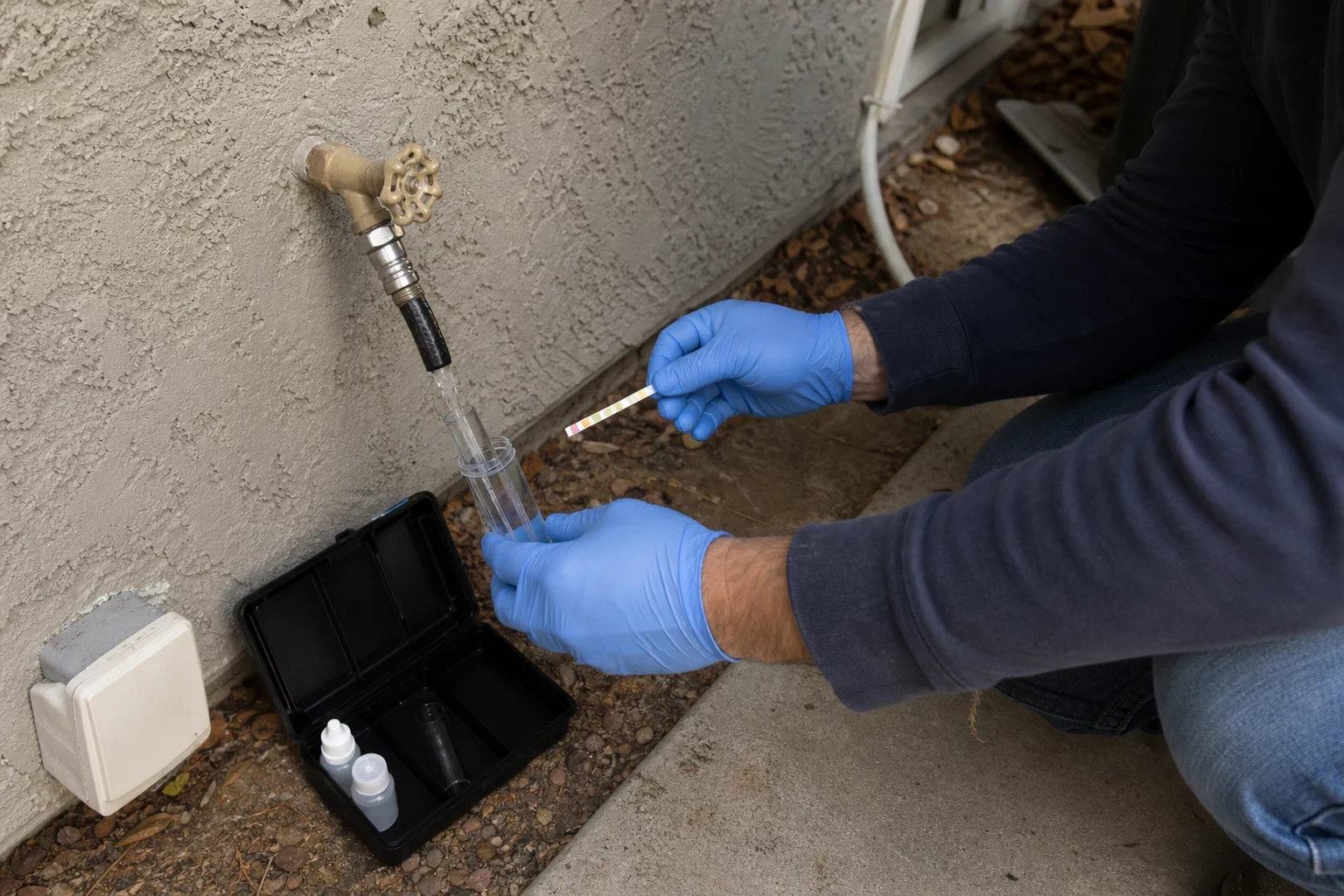
A free test at your tap
We check hardness along with a few related readings. There is no charge and nothing to commit to.
- 2
A clear recommendation
We tell you whether softening is worth doing, which capacity suits your household and whether filtration belongs alongside it. Installed system pricing comes to you by phone before a date is set.
- 3
The install visit
Drop cloths go down first. We close the main briefly, connect the softener and its bypass to the supply line, and run the drain. Where a softener loop already exists, water is usually restored within a few hours.
- 4
Setup and handover
The valve is programmed to your hardness and household, the first salt goes into the brine tank, and we show you the bypass and how to read the salt level. Packaging and offcuts leave with us.
Softener Questions We Hear Often
Will softened water taste salty?
Usually not. The sodium a softener adds scales with your starting hardness and stays small for most homes. Potassium chloride can replace salt in most units if you prefer, and a reverse osmosis faucet at the kitchen sink is another route for drinking and cooking water.
Does a softener really help my water heater?
In a practical sense, yes. Scale on the tank floor and elements slows heat transfer, so the heater stays on longer for each tank of hot water. Keeping hardness out lets it heat closer to its design efficiency and usually lengthens its service life.
How much upkeep does a softener need?
Salt is most of it. With a metered valve, many families add a bag every month or two, depending on use. We show you what a normal salt level looks like and which signs mean it is worth giving us a call.
Can the softener go in my garage with the summer heat?
That is where most softeners live, and the equipment copes with warm air without trouble. We keep it out of direct afternoon sun where the layout allows and leave the brine tank and drain within easy reach.
Do I still need a filter if I get a softener?
That depends on what you want to change. Softening deals with scale; it leaves chlorine, taste and odor alone. Your test results show whether whole-home filtration or reverse osmosis would add real value.
Find Out What Your Water Actually Needs
We start with a free water test at your home and give you a straight answer on whether a softener fits. If it does, you get installed system pricing by phone before anything is scheduled.